common problems
contact details
 Ollies (Guangzhou) Recreation and Sports Equipment Co.
Tel: (020) 82686289
Fax: 020-82694853
Headquarter: No.31-37, Xincun 2 Road, Shangjiang North Street, Dongzhou Village, Xintang Town, Zengcheng City, Guangzhou, Guangdong, China
Systematic management program for koi ponds during high temperatures
When the water thermometer breaks the red line of 30°C and the gill covers of the koi begin to open and close sharply, it is not only a challenge of the season, but also a moment of responsibility given to us by nature. Each koi is a flame in the water, and the light of their scales carries with it the expectations you have had year after year: perhaps the ink of the Showa Sanshiki finally emerging, or the fuller size of the Cha-cari. Managing the high temperatures is never just a matter of technique, but a deep understanding of the rhythms of life - we need to wake up earlier than the sun to monitor dissolved oxygen, be more agile than a rainstorm to regulate pH, and consistently stabilize water quality like the shadow of an old pine by the pool. This program will take you past the searing surface to the underlying logic of ecological balance in water bodies.

I. Temperature regulation system
1、Physical cooling combinations
- Shade mesh was selected from 70% shade rate black knitted mesh, 1.5 meters from the water surface to form an air insulation layer;
- A titanium coil is installed at the inlet of the filtration bin to connect to the underground water circulation system (a temperature control valve is required);
- Fogging sprinklers are turned on from 14:00 to 16:00 daily to cool down using the principle of heat absorption by evaporation of water vapor.
2. Biological cooling strategies
- Climbing plants such as Campsis grandiflora/grapevine are planted around the pool to create ecological shade;
- Water lilies with 20% area floating on the water surface have a root system that can absorb excess nutrient salts.

II. Precision feeding management
1. Adjustment of feed formula
- Protein content reduced to 28%-32% (formerly 35%-40%)
- Add 0.5% Spirulina Powder to enhance the anti-stress ability
- Switch to 3mm slow-sinking feeds to reduce deterioration from surface exposure
2、Feeding monitoring points
- Use infrared thermometer gun to detect fish gill temperature >33℃ immediately stop feeding
- Setting up automatic baiting machine to feed in 6 times (a single amount will not be eaten in more than 3 minutes)
III. Water quality crisis management
1. Algae outbreak tertiary response
- Primary: Installation of 55w nano aerator discs to increase water disturbance
- Intermediate: add potassium persulfate complex salt at 5ml per ton of water
- Ultimate: introduction of 200 Rhodeus sinensis to establish biological control
2. Dissolved Oxygen Assurance Program
- Venturi injector between main pool and filter bin
- Increase air pumps from 3-5 a.m. (when air pressure is lowest)
IV. Filtration system enhancement
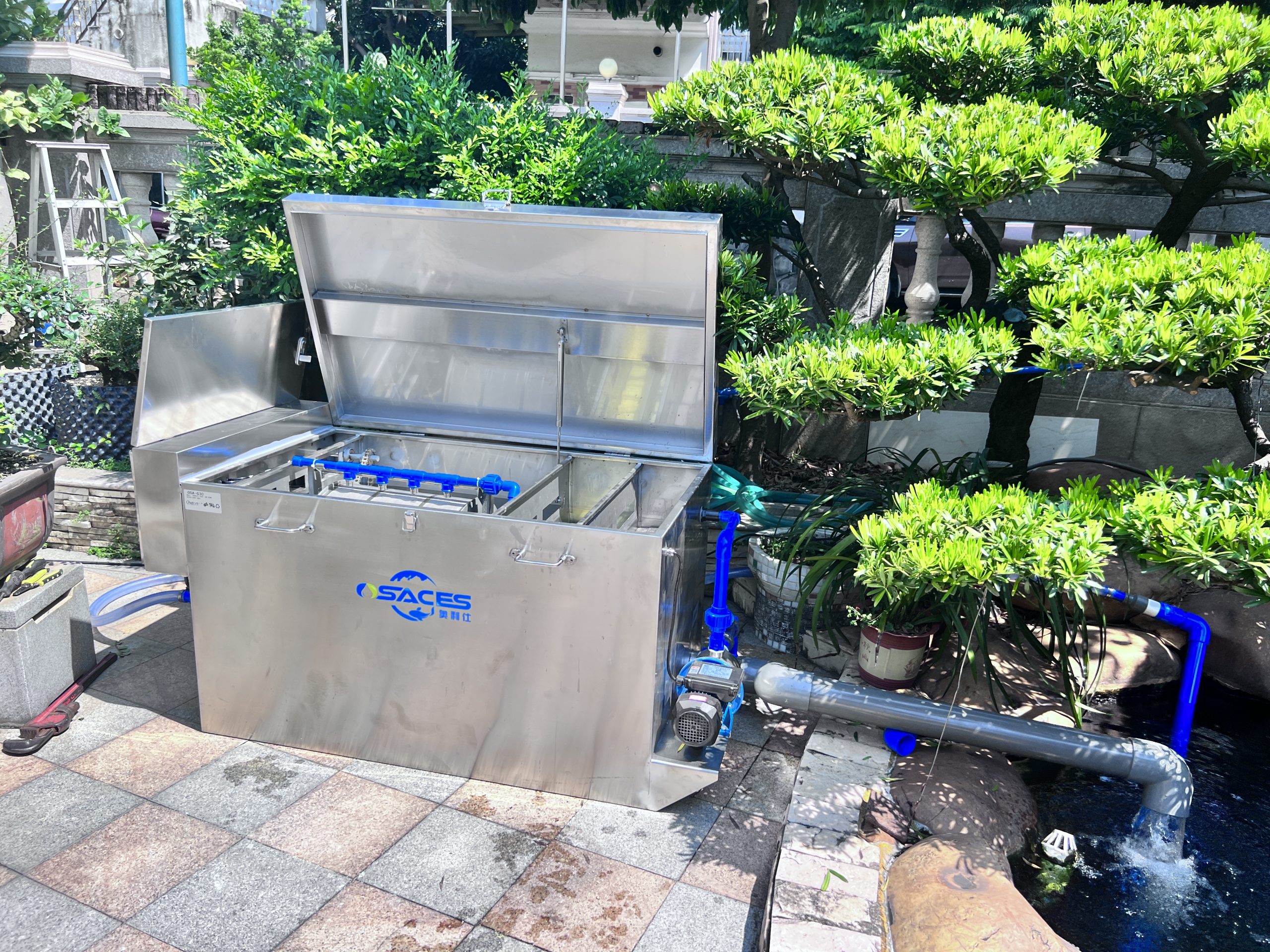
- Mechanical filtration upgrade
- The pre-compartment was changed to use 50ppi pore size biochemical cotton to intercept fine algae
- Addition of a cyclone settler as a first physical filtration step
- Maintenance of biochemical systems
- Monthly rinsing of K1 filter media with raw pool water (no tap water rinsing)
- Volcanic stone layer (thickness ≥ 15cm) in the drip box
- Equipment maintenance calendar
- Every Monday: Check pump bearing lubrication
- 15th of the month: Testing of UV lamp irradiation intensity
- Before the storm: check lightning grounding devices

prime growth period
When the water temperature is 28-32℃, the metabolism of koi is vigorous, and the intake can reach 3%-5% of body weight. feeding high-protein feed (crude protein ≥35%) with small amount of multi-food (4-6 times a day), the weight gain can reach 2-3cm per month. it is recommended to add Spirulina (5%) to enhance the color of the body, and with Vitamin C (200mg per kg of feed) to enhance the immune system. Vitamin C (200mg per kilogram of feed) to enhance immunity.
high risk area
- dissolved oxygen crisis: 32 ℃ water temperature dissolved oxygen than 25 ℃ drop 23%, need to maintain aeration equipment 24 hours of operation (air pump power ≥ 5W / tons of water)
- Ammonia nitrogen accumulation: Increase in baiting leads to ammonia nitrogen concentration easily exceeded (safety value <0.2mg/L), it is recommended to change water 30% weekly and add nitrifying bacteria (10ml per cubic meter).
- parasitic outbreak: Anchor flea reproduction cycle is shortened to 7 days, can be bathed with 0.3ppm trichlorfon for 30 minutes per month
Management points
- Build shade nets to reduce water temperature fluctuations (shade 50%-70%)
- Add EM bacteria (1ppm) at 3-5am to stabilize water quality
- Establish a water temperature-feeding rate control table (e.g., increase feeding rate by 401 TP3T at 30°C compared to 25°C)
Related content
- 锦鲤的季节性充血应该如何预防?
- 春季鱼池过滤的注意事项
- 春节后别急着投喂!锦鲤肠胃的“重启指南”,喂对才能安全“出关”
- 从“勤换水”到“稳生态”:鱼池过滤观念的理性回归
- 全自动鱼池过滤器和普通鱼池过滤器的区别
- 养鲤干货:冬天一到,高手都在做这 3 件事!
- Fish Pond Filter Material Replacement Considerations
- 从零养鱼全攻略:用心经营一方水的生命力
Well-Known Case




 English
  Chinese
  Russian
  Spanish
  Portuguese
  German
  French
  Italian
  Japanese
  Korean