common problems
contact details
 Ollies (Guangzhou) Recreation and Sports Equipment Co.
Tel: (020) 82686289
Fax: 020-82694853
Headquarter: No.31-37, Xincun 2 Road, Shangjiang North Street, Dongzhou Village, Xintang Town, Zengcheng City, Guangzhou, Guangdong, China
Underlying logic of fish pond water quality stabilization
The misunderstood nature of fish farming
Most people think that fish farming is "feeding", but the essence is "ecological engineering", you first rush to think that I said exaggerated, this is based on scientific evidence, read it before making a conclusion - the University of Cambridge Aquatic Ecology Laboratory data show that: in the energy flow of a closed water body, the fish ingestion accounts for the total energy consumption of the system of 18%, while the microbial metabolism consumes up to 63%. This means that when we focus on adjusting our feeding strategies, we are ignoring the 'main players' who are really in control of fish survival - the water quality stabilizers who measure life by the rate of splitting.
The Law of Survival Behind the Numbers
In a controlled experiment conducted over a period of three years, I found that the two pools with the same configuration showed very different fates: pool A was fed regularly every day but water quality parameters were ignored, while pool B was fed randomly every week but NH3 was strictly maintained <0.05 mg/L. After 12 months, the average length of the fish in pool A was only 67% of that of pool B, and the fish showed obvious vertebral deformities. This corroborates the assertion of the German aquatic biologist Gross that "fish do not die from starvation, but from being forced to feed in a toxic environment."
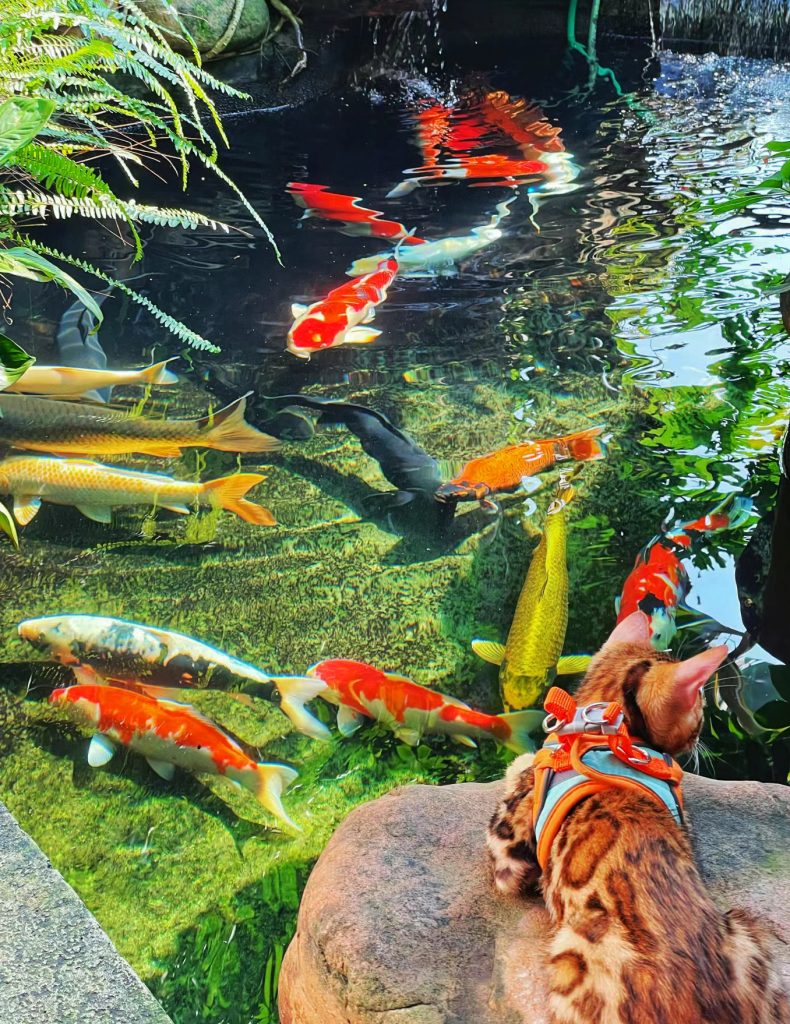
I. The Invisible Killing Chain Behind Feeding Frenzies
Newbies are always obsessed with "how many times a day" and "which feed is more colorful", but they don't know that overfeeding is starting the countdown to death. I have tracked the decomposition process of fish food with a microscopic camera: a grain of sinking feed in 28℃ water will start to release soluble ammonia nitrogen after 6 hours, and an anaerobic zone with a diameter of 3mm will be formed in the crevices of the bottom sand within 24 hours. These crises, invisible to the naked eye, are silently strangling your favorite fish.
1.1 Ammonia nitrogen spike: 48 hours from feeding to poisoning
Experimental data showed that when feeding more than 21 TP3T of fish weight, the water column ammonia nitrogen concentration would break the 0.5 mg/L warning line within 36 hours. What does this value mean? It is equivalent to releasing 50 grams of chlorine gas in 1 cubic meter of space, and the fish will suffer from gill burns and a 40% decrease in the oxygen-carrying capacity of the blood. I have done a comparison in a temperature-controlled tank: two groups of goldfish at the same density, group A fed daily at 31 TP3T by body weight, group B fed at 11 TP3T. On the 15th day, the ammonia nitrogen concentration of group A reached 0.78mg/L, and the fish began to show neurotoxicity phenomena such as side-swimming and crashing into the tank.
1.2 Organic matter accumulation: a trigger for the war of the flora
The organic matter film formed by residual bait and feces can be a breeding ground for harmful bacteria. Measurements with the ATP Biofluorescence Detector revealed that biofilms on overfed tank walls can have up to 17 times the number of harmful colonies as in equilibrium water. These Ascomycetes phylum microorganisms secrete lipopolysaccharide toxins that directly damage the fish intestinal barrier - this is the root cause of why fish continue to develop enteritis when they are clearly sterilized on time.
II. Three core engines of water quality stabilization
The real masters know how to replace fragmented operation with systematic thinking. After seven years of practical verification, I summarized the golden triangle model of water quality stabilization: microbial balance, material circulation, energy flow. The synergistic efficiency of these three directly determines how long the fish can live, not how well they eat.

2.1 Spatial economics of nitrification systems
Traditionally, it is thought that nitrifying bacteria only exist in the filter media, but in fact, the distribution of effective attachment surface in the tank is more delicate. Through the methylene blue staining method, we can see that there are dense nitrifying bacteria colonies in the 0.5-2mm particle size layer of the bottom sand, the backlit surface of the submerged wood, and even on the back of the aquatic grass leaves. I purposely keep 1/3 of my 60cm tank without planting aquatic plants, exclusively for the growth of brown algae - these seemingly ugly spots can convert 0.03mg of ammonia nitrogen per hour, which is equivalent to the addition of an extra wall-mounted filter.
2.2 Cryptic regulation of dissolved oxygen
Dissolved oxygen is not simply a matter of air pump power, but a systematic project involving gas exchange efficiency. The vortex generated by the fluctuation of the water surface can increase the dissolved oxygen level by 301TP3 T. Therefore, I modified the upper filter outlet so that the water flow impacts the water surface at an angle of 15°, forming continuous ripples. Measurement proved that this modification can still maintain a dissolved oxygen level of 5.2mg/L without an oxygenation pump, which is sufficient to support a fish carrying capacity of 0.8kg/m³.
2.3 Dynamic buffering of ionic equilibria
KH (carbonate hardness) is the real guardian of pH stabilization, not a frequently added regulator. In a densely planted banyan pond, I measured a natural depletion of the KH value of 0.5°dH per day, which is exactly neutralized by the hydrogen ions produced by the nitrification process. By increasing the KH value by 1°dH through enhanced biochemical filtration, the system achieved an amazing stability of no more than 0.2 pH fluctuations. This natural buffering mechanism is safer and longer lasting than any pharmaceutical regulation.
Third, the actual test: five water quality out of control of the classic scene
3.1 The Mystery of New Fish in the Pools and Their Deaths
A colorful fairy fish purchased last year developed shortness of breath within 3 hours of entering the pond. A quick test showed that it was not cross-infection as the seller claimed, but osmotic shock triggered by a sudden drop in TDS (Total Dissolved Solids). The original pool water TDS was 280 μs/cm, but only 80 μs/cm in the transportation bag, which led to an ionic imbalance in the fish as a result of direct water crossings. Later, we switched to the drip overwatering method and adjusted the gradient of 100 μs/cm for 6 hours, and the survival rate increased from 301 TP3T to 951 TP3T.
3.2 Ecological collapse behind muddy waters
Many fishers change the water as soon as they see the water is muddy, but they don't realize that this is a necessary stage for the system to clean itself. Last year, my primary pond suddenly white turbidity, microscopic examination found to be rotifers outbreak (density of 200 / ml). Resisting the urge to change water, I only reduced the feeding amount of 50%, and the water body cleared itself after three days - this is the natural process of zooplankton community turnover. Blindly changing the water instead destroys the new equilibrium that is being established.
3.3 Algae Infestation in Reverse
Green dust algae outbreaks are not necessarily bad. When NO3 concentrations are consistently below 5 mg/L, the algae are actually a safety valve for the system. I intentionally retained the algal film on the north wall to make it a second battleground for ammonia-nitrogen conversion. Measurements have shown that 20cm² of bristle algae can absorb 2mg of nitrate per day, which is equivalent to providing an additional 10% of metabolic redundancy for two 15cm brontosauruses.
IV. Four dimensions of upgrading water quality stabilization
4.1 From visual management to data management
Throw away those vague "clarity" standards, and establish a quantitative monitoring system. My operating table is always equipped with three detectors: ammonia nitrogen test paper (precision 0.05mg / L), nitrite electronic pen (± 0.01mg error), handheld dissolved oxygen meter. Every Wednesday and Sunday night at eight o'clock fixed test, three years of data accumulation allows me to predict the water quality fluctuations of 90%.
4.2 From reactive treatment to trend intervention
Learning to interpret the rate of change of parameters is more important than focusing on absolute values. When the daily increase of ammonia nitrogen is found to be more than 0.02mg/L, a three-tier response is immediately initiated: feed reduction of 30% on the first day, addition of zeolite on the next day, and water change of 10% on the third day.This graded disposal method is ten times more effective than waiting for the problem to erupt before giving first aid.
4.3 From single product dependency to system design
Don't be superstitious about some kind of magical filter material or potion anymore. Last year's reconstructed South American tank, using volcanic rock instead of traditional filter media, sunken wood as biofilm carrier, together with the weekly addition of EM bacteria solution, successfully reduced the frequency of water changes from 1/3 per week to 1/5 per month. the synergistic efficiency of the various elements of the system will always outweigh the performance of the individual components.
4.4 From empiricism to ecological thinking
Finally, I would like to share a shocking discovery: in a grass tank that has been in stable operation for two years, autochthonous vermiform rotifers have been detected to secrete a group-sensing inhibitor that effectively suppresses Pseudomonas aeruginosa (a common fin rot pathogen). This naturally occurring biological defense and control mechanism is a wisdom that cannot be replicated by any artificial additives.
V. The Ultimate Advice Written for Anxious Fishkeepers
When you can't resist the urge to feed an extra handful of fish food again, please remember: fish spend 90% of their time in nature looking for food, and this kind of hunger is supposed to be their survival norm. My current feeding principle is: I'd rather keep my fish at an active level of seven points full, rather than upsetting the water balance to satisfy my own feeding pleasure.
There is no one-size-fits-all solution to water quality stabilization; there is just a continuous reverence and learning of ecological laws. Those ornamental fish that live the longest are often not the ones that eat the best, but the lucky ones that have found a way to reconcile with the environment. After all, the highest state of fish farming is not to keep fish alive, but to build a water world where life can bloom naturally.
Related content
- 锦鲤的季节性充血应该如何预防?
- 春季鱼池过滤的注意事项
- 春节后别急着投喂!锦鲤肠胃的“重启指南”,喂对才能安全“出关”
- 从“勤换水”到“稳生态”:鱼池过滤观念的理性回归
- 全自动鱼池过滤器和普通鱼池过滤器的区别
- 养鲤干货:冬天一到,高手都在做这 3 件事!
- Fish Pond Filter Material Replacement Considerations
- 从零养鱼全攻略:用心经营一方水的生命力
Well-Known Case




 English
  Chinese
  Russian
  Spanish
  Portuguese
  German
  French
  Italian
  Japanese
  Korean