common problems
contact details
 Ollies (Guangzhou) Recreation and Sports Equipment Co.
Tel: (020) 82686289
Fax: 020-82694853
Headquarter: No.31-37, Xincun 2 Road, Shangjiang North Street, Dongzhou Village, Xintang Town, Zengcheng City, Guangzhou, Guangdong, China
How to choose fish pond filtration equipment for different scenes? From traditional to integrated comprehensive analysis
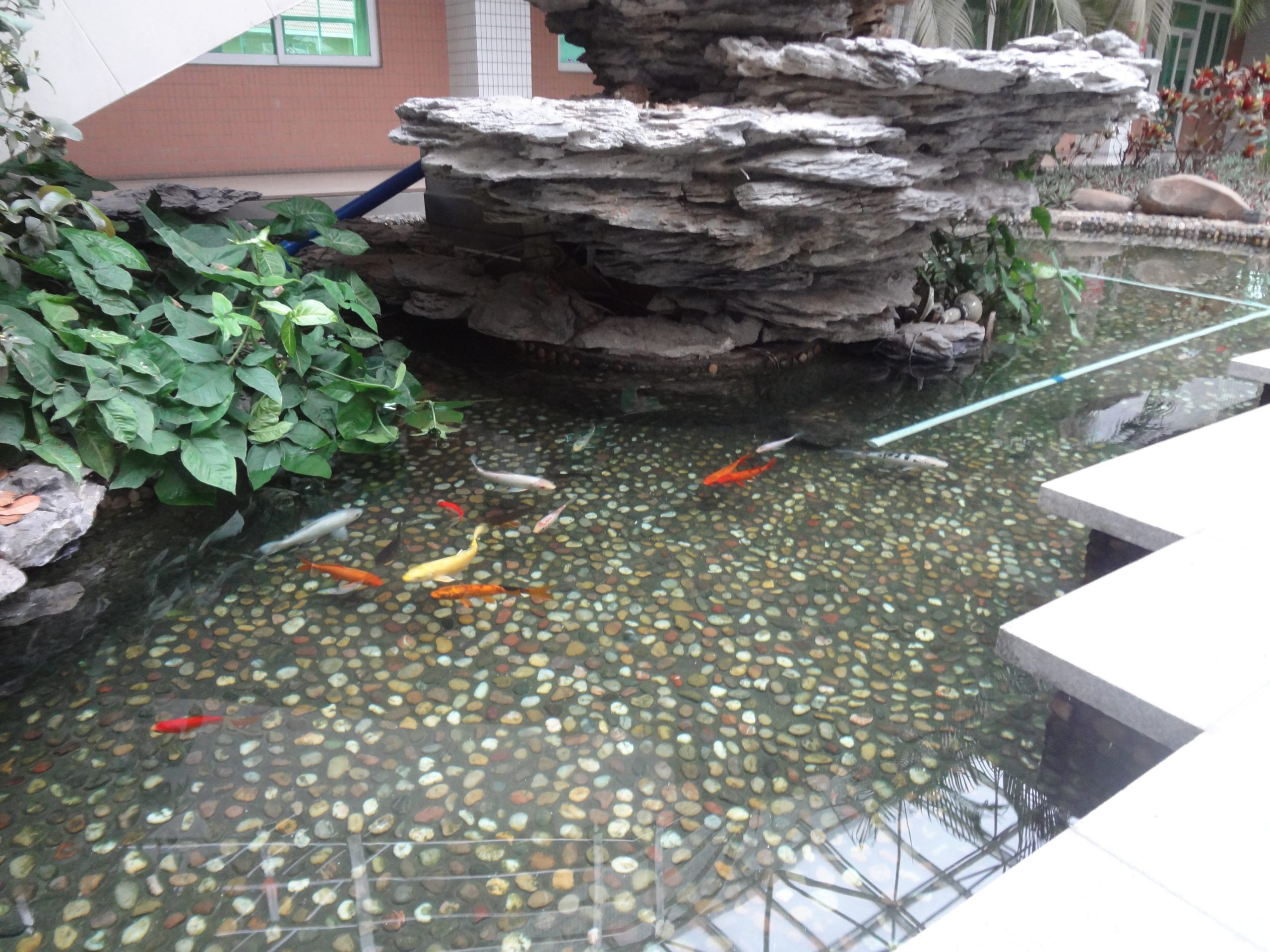
Each fish farmers may have had such moments: early in the morning close to the koi pond, but found that the water body with turbidity, carefully maintained koi did not have the past dynamic; care of the landscape pool, always have to repeatedly clean up floating algae, but it is always difficult to maintain the beauty of that transparent; even high-density aquaculture, but also always beware of the heart -- checking the ammonia nitrogen exceeds the standard, so that the hard work of cultivating fish and shrimp in crisis. Even in the case of high-density aquaculture, one is always afraid of exceeding the ammonia nitrogen standard, which may cause the hard-earned fish and shrimp to encounter crisis.
In fact, the water quality of the fish pond is good or bad, the key is hidden in the word "filtration". But the needs of different scenarios are very different: Koi pond excretion, filtration efforts to keep up; landscape pools pay attention to the aesthetic, the equipment must also take into account the space and convenience; indoor small pools are afraid of noise, outdoor pools to be highly efficient ...... What makes people more entangled is that the traditional filtration pool and the emerging integration of the equipment how to choose? The equipment is not durable, how to control ammonia nitrogen is scientific?
Today's article is to help you solve these puzzles. We will start from the different scenarios of filtration configuration differences, with real cases to prove the durability of the equipment, a careful comparison of the advantages and disadvantages of traditional and integrated equipment, but also scientific data to make clear the relationship between biological filter material, dissolved oxygen and ammonia nitrogen removal rate -- not to pile up technology, but only to find the right fish pond for your " Exclusive filtration program", so that every time you look at the fish pond, you can see the pleasant appearance of clear water and happy fish.
I. Core differences in scenario-based filtering configurations
The configuration of fish pond filtration equipment needs to accurately match the needs of the scene, and the core difference is reflected in the design of the filtration system and the dynamic balance of the system's responsiveness. For Koi ponds with high excretion, due to the high metabolic intensity of fish, the filtration space needs to be set at 15%-20% of the pond capacity, and the pump flow rate is configured at 2-3 times of the total amount of water per hour, to ensure the timely removal of pollutants. Take a 10 cubic meter koi pond in Shanghai as an example, it needs to be equipped with a 20-30 cubic meter/hour circulating water pump, together with at least 1.5 cubic meter filtration unit, in order to maintain the ammonia nitrogen concentration of less than 0.5mg/L as the standard for ornamental fish culture.
Because of the low density of aquaculture, the filtration space can be reduced to 10%-15%, and the circulation flow rate can be reduced to 1/4-1/3 of the total amount of water per hour. 5 cubic meters of landscape tanks only need 0.5-0.75 cubic meters of filtration space and 1.25-1.67 cubic meters of pump flow rate, which can satisfy the transparency of the landscape requirements of ≥0.5 m. The high-density commercial tanks need to strengthen the filtration ratio to 20%-30%, and use multi-unit combination systems to cope with the pressure of bioburden. High-density commercial tanks require an enhanced filtration ratio of 20%-30%, and a multi-unit combination system to cope with bioburden pressure.
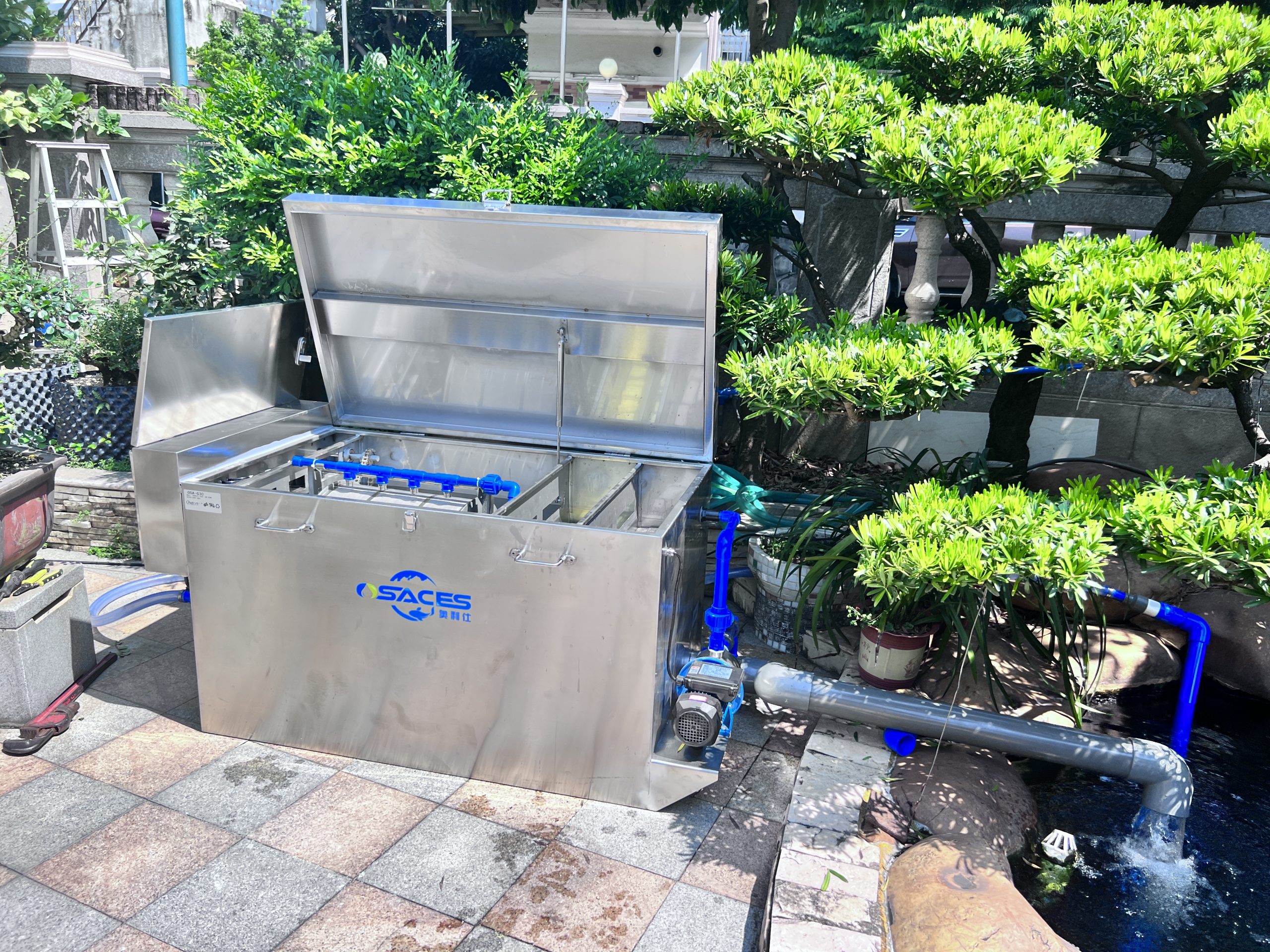
Small indoor fish pond (less than 3 cubic meters) pay more attention to the quietness of the equipment and space compatibility, suitable for the use of 1000-1500 liters / hour flow rate of external filters; outdoor large fish pond (more than 20 cubic meters) need to be a modular combination of equipment, 80 cubic meters of the fish pond using automatic rotary drum biochemical integrated machine can be achieved through a number of parallel equipment to achieve high efficiency treatment, and its modular design is better than the traditional Its modular design saves more than 60% floor space than the traditional civil filtration pool.
II. Empirical analysis of equipment durability
The choice of material has a significant impact on durability: the concrete structure of a traditional filter tank is susceptible to water erosion leading to leaks, while the all-metal architecture of an integrated plant is much more resistant to corrosion. In terms of maintenance intervals, conventional systems require an average of 276 hours of maintenance per year, whereas the all-in-one units require only quarterly motor inspections, significantly reducing the risk of equipment wear and tear. This difference in durability is especially critical in commercial farming scenarios, reducing financial losses due to equipment downtime.
III. Technical comparison of traditional filtration pools and integrated equipment
|
comparison dimension |
Conventional Filtration Tanks |
Integrated fish pond filtration equipment |
|
core principle |
Civil Sedimentation in Bins + Single Filter Unit |
Integrated physical filtration + biochemical reaction + UV sterilization |
|
Solid-liquid separation efficiency |
90% Above |
99.9% |
|
construction period |
Civil works required, usually 1-3 months |
Modular installation, 1-2 days |
|
footprint (of a building, piece of equipment etc) |
1/5-1/3 of pond area |
Requires only 1-2 square meters next to the fish pond |
|
Average annual maintenance cost |
200-600, frequent manual cleaning required |
80-90% cost savings, automatic backwash and drain |
|
Water Stability |
Dependent on manual operations, high volatility |
Intelligent control, long-lasting ecological purification |
The difference in technology principle determines the treatment effect: the traditional filtration pool relies on physical precipitation and simple biochemical effect, additional configuration of ultraviolet germicidal lamps to control algae; integrated equipment through the "interception - decomposition - sterilization" of the three-stage treatment, 80-150μm of the 80-150μm filtration precision can retain most of the suspended particles, the built-in biochemical module can stably cultivate nitrifying bacteria, and the UV system kills pathogens simultaneously. In the comparison experiment of 20 cubic meters fish pond, the ammonia nitrogen control effect of the integrated equipment is more stable than the traditional system, especially in the peak breeding season can still maintain a low concentration level.
Installation scene adaptability, the traditional system of high requirements for civil construction, the old pool remodeling pipeline installed in plain view to affect the aesthetic; integrated equipment without civil construction, connected to the electricity can run, especially suitable for space-constrained courtyard scenes. This flexibility makes its application rate in landscape fish pond renovation projects increase year by year.
IV. Analysis of the scientific advantages of integrated equipment
The core advantage of the integrated filtration equipment stems from the system design concept of ecological engineering. Its multi-stage treatment unit forms a complete micro-ecological cycle: the physical filtration stage intercepts solid particles and reduces the load on the biochemical system; the biochemical module converts ammonia nitrogen into nitrate through the nitrifying bacteria community on the surface of the biological filter material; the ultraviolet sterilization controls the over-propagation of microorganisms, and all three synergistically work together to achieve water purification.
From the perspective of microbial ecology, the high quality filter media such as bacterial house and nano ring had large specific surface area, and the abundance of Aspergillus phylum and Nitrospirillus phylum in the biofilm formed on their surfaces was significantly higher than that of traditional filter media. The experimental data showed that the ammonia nitrogen removal rate of the tourmaline ball group reached 90.8% 12 hours earlier than that of the polyethylene ring group and 24 hours earlier than that of the polystyrene foam filter bead group. This efficient membrane performance was attributed to the microscopic pore structure on the surface of the filter media, which provided an ideal habitat for the functional flora.
Automation control technology improves system stability: the uneven aeration problem of traditional filtration tanks can lead to localized dissolved oxygen deficiency, while the integrated equipment maintains the DO concentration in the optimal range of 2.41-4.22mg/L through precise adjustment of the air-water ratio. When the air-water ratio is 15:1, the abundance of ammonia oxidizing bacteria (AOB) and anaerobic ammonia oxidizing bacteria (ANAMMOX) can reach more than 10¹²copies/g of dry sludge, and the ammonia nitrogen removal rate is stable at more than 90%.
V. Mechanisms of influence of biofilter media and dissolved oxygen levels
The surface area of biofilter media acts on the ammonia removal efficiency by affecting the carrying capacity of bacteria. Experiments at Dalian Ocean University showed that the differences in the specific surface area of different filter media resulted in significantly different treatment effects: the far-infrared bacterial house provided a larger attachment area due to its porous structure, and the ammonia nitrogen removal rate reached 98.061 TP3T within 48 hours.
Dissolved oxygen affects nitrogen removal by regulating microbial metabolic activity. The experiments of BAF showed that when the air-water ratio was increased from 8:1 to 15:1, the ammonia nitrogen removal rate was increased from 75% to more than 90%, and the total nitrogen removal rate was up to 83%. However, it is not true that the higher the dissolved oxygen is the better--when the DO concentration is more than 4.22 mg/L, the activity of anaerobic ammonia oxidizing bacteria may be inhibited. ammonia oxidizing bacteria activity. Through the intelligent aeration system, the integrated equipment precisely controls the gas-water ratio at about 15:1, which not only ensures the oxygen demand of the ammonia oxidation process, but also creates conditions for the subsequent denitrification.
This synergistic effect is manifested in practical application: the ammonia nitrogen concentration of the treated water body can be stably controlled below 0.5mg/L, while the traditional filtration tank often exceeds the limit of 1.0mg/L during the peak loading period. For highly sensitive fish such as koi, the stability of water quality is directly related to the success rate of aquaculture.
VI. Synthesis of recommendations on technology options
The selection of fish pond filtration system needs to consider the scene demand, budget constraints and maintenance ability. For high-end ornamental scenes such as koi ponds, priority should be given to the integrated equipment with 2-3 times the circulation volume to ensure water clarity; ordinary landscape ponds can use traditional systems, but enough time should be reserved for maintenance; commercial aquaculture should focus on the long-term economy of the equipment, and the integrated equipment, although the initial investment is high ($8,000-14,000), the whole life cycle cost is lower.
Future trends show that with the advancement of biofilter technology and the popularization of intelligent control, the integrated equipment will continue to develop in the direction of miniaturization and energy saving. Its core advantage lies not only in space saving and easy operation, but also in the scientific ecological design that realizes a qualitative leap in water treatment efficiency and provides systematic solutions for different scenarios of fish pond management.
The traditional filtration pool has its past, but it is difficult to beat the integrated equipment, "ready to use, automatic maintenance" of the convenience; behind the complex parameters, hidden is to make the water quality stable scientific logic -- choose the right equipment to match the scene, in fact, it is for the fish pond to plant a "invisible barrier" not only to stop impurities, but also to raise good nitrifying bacteria to keep the water in a translucent state. "Invisible barrier", not only can stop impurities, but also can raise good nitrifying bacteria, so that the water itself to maintain a translucent state.
In the future, when you take care of the fish pond, perhaps you do not have to a bunch of parameters difficult: know the koi pond should be equipped with what flow rate of the pump, clear how to balance the beauty of the landscape pond and worry, but also understand the integration of equipment can help you save how much time. After all, the joy of raising fish is never from repeated maintenance, but when you approach the fish pond, you can look at the bottom of the water stones, see the fish flopping tail swim over the look.
Related content
- 做景观水处理,为什么建议选择有项目积淀的专业厂家
- 地产项目偏爱的镜面涌泉水池,藏着哪些人居魅力?
- 转鼓微滤生化一体机的核心优势
- 做景观水处理,为何建议选择有项目积淀的专业厂家
- 拒绝后期“伤筋动骨”:现代地产镜面水池过滤系统选型
- 建池容易养水难!为什么很多地产水景建成后水质崩溃?
- 景观水池施工必看!前期省过滤系统,后期运维成本极易大幅增加
- 高端地产景观的核心密码:水系造境,净水保值
Well-Known Case



 English
  Chinese
  Russian
  Spanish
  Portuguese
  German
  French
  Italian
  Japanese
  Korean